
Introduction
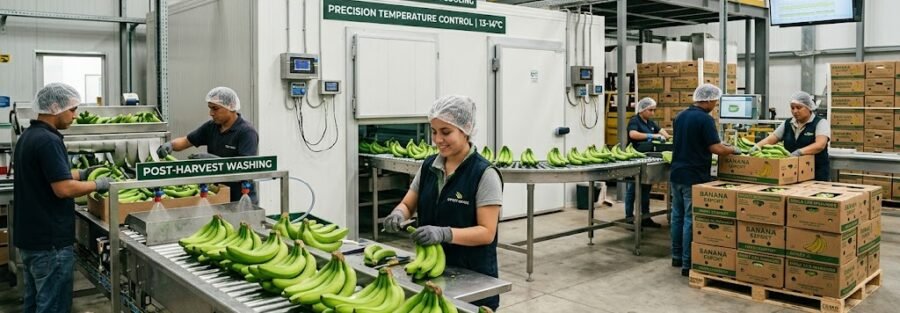
Shelf Life Management in Banana Export is one of the most important factors in ensuring that bananas reach international markets fresh, safe, and market-ready. Since bananas continue to ripen after harvesting, exporters must carefully manage temperature, humidity, packaging, and transportation throughout the supply chain. Effective shelf-life management reduces spoilage, minimises financial losses, and improves customer satisfaction. This guide explains the best practices, storage conditions, and technologies used to maximise the shelf life of bananas during export.
Why Shelf-Life Management is Important in Banana Export
Bananas are highly perishable fruits. Without proper post-harvest handling and storage, they can ripen too quickly, suffer physical damage, or develop diseases before reaching consumers.
Benefits of proper shelf life management include:
- Reduced post-harvest losses
- Improved fruit quality
- Extended freshness
- Higher export profitability
- Better customer satisfaction
- Compliance with international quality standards
Ideal Storage Conditions for Banana Export
Maintaining the correct environmental conditions is essential.
| Parameter | Recommended Value |
|---|---|
| Temperature | 13°C–14°C (55°F–57°F) |
| Relative Humidity | 90–95% |
| Air Circulation | Continuous |
| Ethylene Exposure | Minimal |
| Packaging | Ventilated cartons |
These conditions help slow the ripening process while preserving flavour and texture.
Factors Affecting Shelf Life Management in Banana Export
1. Harvesting at the Correct Maturity
Bananas should be harvested at the mature green stage. Harvesting too early affects flavour, while harvesting too late shortens shelf life.
2. Temperature Control
Maintaining 13°C to 14°C during storage and transportation prevents chilling injury and delays ripening.
3. Humidity Management
High relative humidity (90–95%) minimises moisture loss and prevents fruit shrivelling.
4. Proper Packaging
Use strong, ventilated export cartons with protective liners to reduce bruising and improve airflow.
5. Cold Chain Management
A continuous cold chain—from harvest to retail—is critical to preserving banana quality.
The cold chain includes the following:
- Harvesting
- Pre-cooling
- Packing
- Cold storage
- Refrigerated transportation
- Distribution
- Retail storage
6. Ethylene Management
Bananas naturally produce ethylene gas, which accelerates ripening.
Best practices include:
- Avoid storing bananas with high ethylene-producing fruits.
- Ensure proper ventilation.
- Use ethylene absorbers when necessary.
Best Practices for Shelf Life Management in Banana Export
- Harvest at the correct maturity stage.
- Cool bananas promptly after harvest.
- Maintain consistent temperatures throughout transport.
- Use refrigerated (reefer) containers.
- Monitor temperature and humidity with digital sensors.
- Prevent physical damage during handling.
- Follow international food safety standards.
Common Mistakes That Reduce Banana Shelf Life
Avoid these common issues:
- Temperature fluctuations
- Poor ventilation
- Excessive ethylene exposure
- Improper packaging
- Delayed transportation
- Mechanical damage during loading
- High storage temperatures
Technologies Used in Banana Export
Modern exporters use advanced technologies such as:
- IoT temperature monitoring
- GPS shipment tracking
- Smart reefer containers
- Data loggers
- Ethylene monitoring systems
- Automated cold storage facilities
These technologies help maintain consistent quality throughout the export process.
Benefits of Effective Shelf Life Management
Proper shelf life management offers several advantages:
- Longer storage life
- Better fruit appearance
- Reduced spoilage
- Increased export revenue
- Lower transportation losses
- Enhanced customer trust
- Improved international competitiveness
FAQs
What is the ideal temperature for banana export?
The recommended storage and transportation temperature is 13°C to 14°C (55°F–57°F).
Why is shelf life management important in banana export?
It helps maintain freshness, reduce spoilage, preserve quality, and ensure bananas reach international markets in excellent condition.
How can banana shelf life be extended?
Shelf life can be extended by maintaining proper temperature, humidity, cold chain management, and using appropriate packaging.
What packaging is best for banana exports?
Ventilated corrugated cartons with protective liners are commonly used for international banana shipments.
Conclusion
Shelf Life Management in Banana Export is essential for delivering fresh, high-quality bananas to global markets. By controlling temperature, humidity, packaging, and transportation while maintaining an uninterrupted cold chain, exporters can significantly reduce spoilage and extend product shelf life. Investing in modern monitoring technologies and following international best practices ensures better quality, lower losses, and stronger competitiveness in the global banana trade.