
Bananas are one of the most widely traded fruits in the world. Every year, millions of tons are transported from tropical regions to international markets. Since bananas are highly sensitive to temperature fluctuations, maintaining the correct shipping temperature is essential to preserve their freshness, color, texture, and taste.
Whether you are an exporter, importer, logistics company, or fruit distributor, understanding the temperature requirements for banana shipment can significantly reduce spoilage and improve product quality. This guide explains the ideal shipping temperatures, cold chain practices, humidity requirements, and best transportation methods.
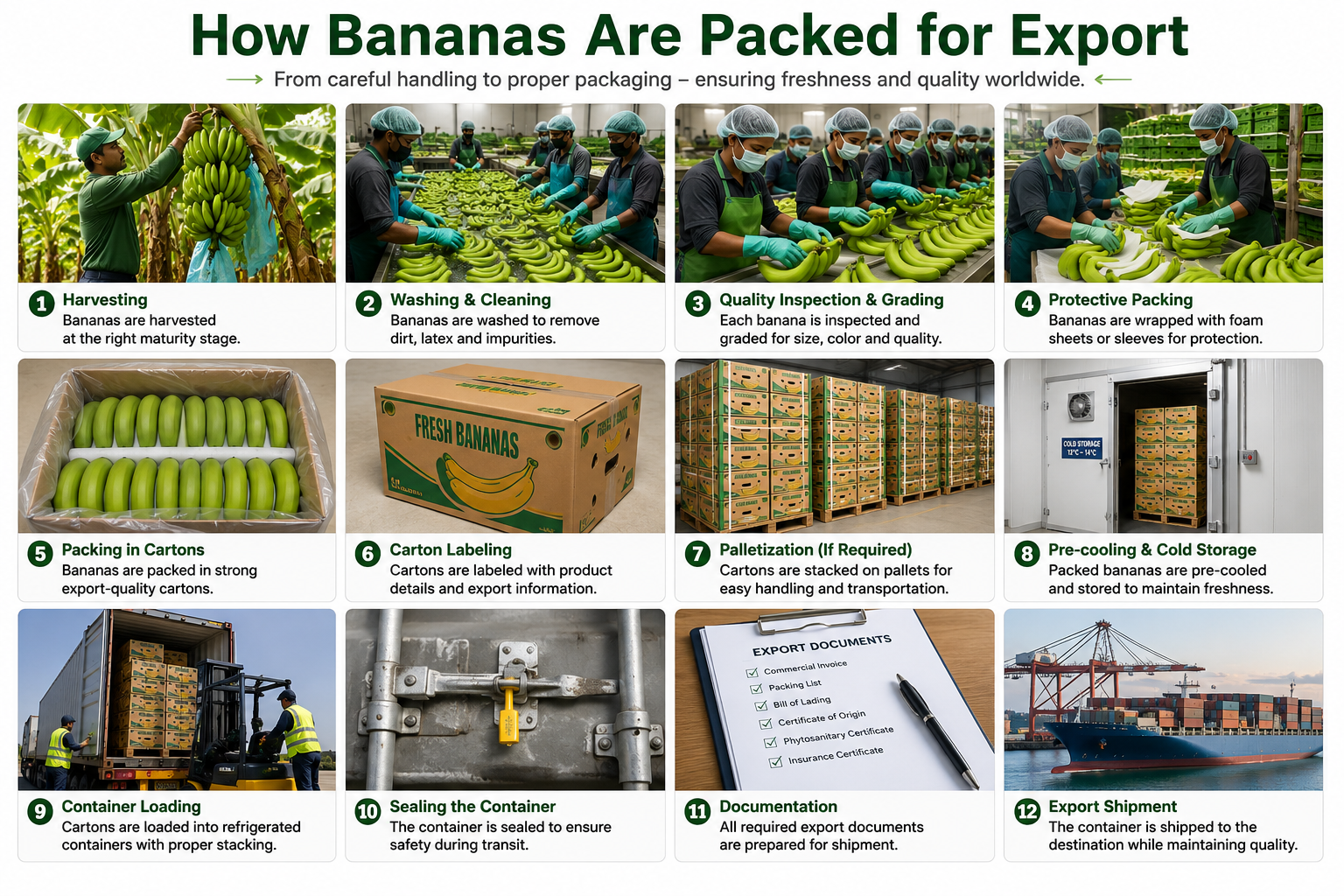
Why Temperature Control Matters
Bananas are climacteric fruits, meaning they continue to ripen after harvesting. Improper temperatures can cause:
- Premature ripening
- Chilling injury
- Blackened peel
- Uneven color development
- Loss of flavor
- Increased spoilage
- Reduced shelf life
Maintaining the right temperature ensures that bananas reach their destination in optimal condition.
Ideal Temperature Requirements for Banana Shipment
The recommended shipping temperature for green bananas is:
| Stage | Recommended Temperature |
|---|---|
| Green Bananas | 13°C to 14°C (55°F–57°F) |
| Relative Humidity | 90%–95% |
| Air Circulation | Continuous airflow |
| Ethylene Exposure | Avoid during shipment |
Temperatures below 13°C can cause chilling injury, while temperatures above 15°C accelerate ripening.
What Happens If Bananas Get Too Cold?
Shipping bananas below 13°C may lead to chilling injury.
Symptoms include:
- Gray or brown peel
- Poor ripening
- Hard texture
- Internal discoloration
- Reduced sweetness
- Surface pitting
Once chilling injury occurs, bananas cannot recover completely.
What Happens If Temperature Is Too High?
Higher temperatures speed up respiration and ripening.
Possible issues include:
- Yellowing during transport
- Soft fruit
- Increased fungal growth
- Short shelf life
- Customer rejection
- Financial losses
Importance of the Cold Chain
A continuous cold chain is essential from farm to retail.
The cold chain includes:
- Harvesting
- Pre-cooling
- Packing
- Refrigerated storage
- Reefer container transportation
- Distribution center
- Retail delivery
Even brief temperature fluctuations can reduce fruit quality.

Best Humidity Level for Banana Shipment
Humidity plays an equally important role.
Maintain:
Relative Humidity: 90%–95%
Proper humidity prevents:
- Moisture loss
- Shriveling
- Weight reduction
- Skin damage
Air Circulation Requirements
Fresh air circulation removes excess heat and maintains uniform temperatures.
Proper ventilation also helps reduce carbon dioxide buildup inside refrigerated containers.
Banana Shipment in Reefer Containers
Modern banana exports rely on refrigerated (reefer) containers equipped with:
- Digital temperature control
- Humidity management
- Continuous monitoring
- Air circulation systems
- Data logging
- Remote tracking
These technologies ensure bananas remain fresh throughout long-distance transportation.
Ethylene Management During Shipping
Bananas naturally produce ethylene gas as they ripen.
During transportation:
- Keep bananas away from ethylene-producing fruits such as apples and avocados.
- Maintain proper ventilation.
- Use ethylene absorbers when necessary.
This slows premature ripening.

Best Practices for Banana Transportation
To maintain quality:
Harvest at the Correct Maturity
Use Proper Packaging
Maintain Consistent Temperature
Monitor Temperature Continuously
Inspect Containers Before Loading
Maintain Clean Storage Conditions
Common Mistakes During Banana Shipment
Avoid these common errors:
- Incorrect temperature settings
- Poor ventilation
- Broken cold chain
- Excess ethylene exposure
- Delayed transportation
- Improper stacking
- Overloading containers
Shelf Life of Bananas During Shipment
With proper storage:
| Storage Condition | Shelf Life |
|---|---|
| 13–14°C | 3–4 weeks |
| Room Temperature | 5–7 days |
| Ripening Room | 4–7 days |
Frequently Asked Questions
What is the ideal temperature for banana shipment?
Green bananas should be transported at 13°C–14°C (55°F–57°F).
Why shouldn’t bananas be stored below 13°C?
Temperatures below 13°C cause chilling injury, resulting in poor ripening and peel discoloration.
Can bananas be transported at room temperature?
Only for very short local deliveries. Long-distance shipments require refrigerated transport.
What humidity is best for banana shipment?
Maintain 90–95% relative humidity.
How are bananas transported internationally?
Most international banana shipments use refrigerated containers with controlled temperature, humidity, and ventilation.
Conclusion
Maintaining the correct temperature requirements for banana shipment is essential for preserving fruit quality and minimizing losses. By keeping bananas at 13°C to 14°C, maintaining 90–95% humidity, ensuring proper ventilation, and protecting the cold chain throughout transportation, exporters and distributors can deliver fresh, high-quality bananas to markets around the world.
Whether you’re involved in banana farming, exporting, or logistics, following these best practices helps extend shelf life, reduce spoilage, and improve customer satisfaction.