
Understanding Rice Grades for International Trade
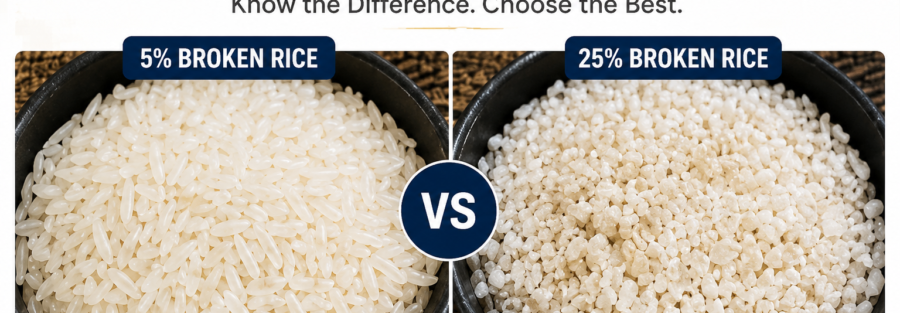
Understanding the Difference Between 5% Broken and 25% Broken Rice is essential for rice importers, wholesalers, distributors, and food processing businesses. The percentage of broken grains directly impacts rice quality, appearance, market value, and pricing. Whether you are purchasing rice for retail distribution, food service, or industrial processing, knowing the difference between these two grades can help you make the right buying decision and maximize profitability.
As a trusted rice exporter, VM EXIM supplies high-quality rice products to global markets, helping buyers choose the right rice grade based on their business requirements and budget.
What is Broken Rice?
Broken rice refers to rice grains that are fractured during the milling and processing stages. These grains are separated from whole grains and categorized according to the percentage of broken kernels present in the final product.
It is important to note that broken rice retains the same nutritional value as whole rice. The primary difference lies in appearance, grain length, and market preference.
What is 5% Broken Rice?
5% Broken Rice is a premium-grade rice containing a maximum of 5% broken grains. This means that at least 95% of the grains remain whole, giving the rice a more uniform appearance and higher market value.
Features of 5% Broken Rice
- Premium quality rice
- Attractive grain appearance
- Higher market demand
- Better presentation for retail sales
- Uniform cooking characteristics
- Preferred by hotels and restaurants
Common Uses of 5% Broken Rice
- Household consumption
- Supermarkets and retail chains
- Hotels and restaurants
- Premium food brands
- International export markets
What is 25% Broken Rice?
25% Broken Rice contains up to 25% broken grains. While it may not offer the same visual appeal as premium-grade rice, it remains a highly economical option for bulk buyers and industrial applications.
Features of 25% Broken Rice
- Cost-effective pricing
- Suitable for large-volume purchases
- Good cooking performance
- Widely available in export markets
- Ideal for food processing industries
Common Uses of 25% Broken Rice
- Bulk food production
- Institutional kitchens
- Food processing industries
- Animal feed manufacturing
- Starch and brewing industries
Difference Between 5% Broken and 25% Broken Rice
| Feature | 5% Broken Rice | 25% Broken Rice |
|---|---|---|
| Broken Grain Content | Up to 5% | Up to 25% |
| Appearance | Premium and Uniform | Less Uniform |
| Market Demand | Higher | Moderate |
| Export Value | Premium | Economical |
| Cooking Quality | More Consistent | Good |
| Retail Suitability | Excellent | Limited |
| Industrial Use | Moderate | High |
| Price | Higher | Lower |
Factors Affecting Rice Pricing
Several factors influence the pricing of rice grades in international markets:
Grain Quality
Rice with fewer broken grains commands a higher price due to its premium appearance and market preference.
Market Demand
Retail consumers generally prefer rice with a lower percentage of broken grains.
Export Standards
Many countries have specific import requirements regarding grain quality and broken percentage.
Packaging and Logistics
Packaging quality, transportation costs, and shipping destinations also affect final pricing.
Benefits of Importing Rice from India
India is one of the world’s largest rice exporters and supplies both 5% Broken Rice and 25% Broken Rice to international markets.
Advantages of Indian Rice Exporters
- Consistent quality standards
- Competitive export pricing
- Large-scale production capacity
- Global shipping support
- Multiple rice varieties available
- Flexible packaging solutions
- Timely delivery and documentation support
Available Packaging Options
Leading rice exporters offer various packaging options to meet buyer requirements.
Standard Packaging Sizes
- 5 Kg Bags
- 10 Kg Bags
- 25 Kg Bags
- 50 Kg PP Bags
Customized Packaging
Many exporters also provide:
- Private Label Packaging
- Customized Branding
- Export-Grade PP Bags
- Printed Packaging Solutions
Which Rice Grade Should You Choose?
Choose 5% Broken Rice If:
- You serve retail markets.
- Product appearance is important.
- You supply supermarkets or restaurants.
- Premium quality is required.
Choose 25% Broken Rice If:
- You need economical pricing.
- You purchase in bulk quantities.
- The rice will be processed further.
- Industrial applications are your primary focus.
Conclusion
The primary difference between 5% Broken Rice and 25% Broken Rice lies in the percentage of broken grains, market value, and intended use. While 5% Broken Rice is preferred for premium retail and hospitality sectors, 25% Broken Rice is widely used in bulk purchasing and industrial applications due to its affordability.
Understanding these distinctions helps importers, distributors, wholesalers, and food businesses select the most suitable rice grade based on quality requirements, target market, and budget.