Introduction
Understanding how container loading is done for rice export is essential for ensuring that rice reaches international buyers in excellent condition. Proper container loading minimizes the risk of moisture, contamination, and damage during transit while maintaining the quality of the product.
India is one of the world’s largest exporters of Basmati and Non-Basmati rice, shipping thousands of containers every year. Whether you are a new exporter or an experienced trader, knowing the correct container loading process can help reduce losses and improve customer satisfaction.
At VM EXIM International, we follow strict quality standards and international export practices to ensure every shipment is loaded safely and delivered on time.
Why Proper Container Loading Matters
Proper container loading is a critical step in the rice export process because it helps:
- Protect rice from moisture and contamination
- Prevent damage during transportation
- Maximize container space efficiently
- Reduce transit losses
- Meet international shipping standards
- Ensure customer satisfaction
Poor loading practices can lead to damaged packaging, reduced product quality, and costly claims.
Step 1: Container Inspection
The first step in how container loading is done for rice export is inspecting the shipping container.
Before loading begins, the container is checked for:
- Clean interior
- Dry floor and walls
- No unpleasant odor
- No rust or holes
- No water leakage
- Proper locking system
Only containers that meet export standards are approved for loading.
Step 2: Cleaning the Container
Even after inspection, the container is cleaned thoroughly to remove:
- Dust
- Dirt
- Moisture
- Previous cargo residue
- Insects or pests
A clean container helps maintain rice quality throughout the journey.
Step 3: Moisture Control
Rice is highly sensitive to moisture. Exporters therefore use moisture control methods such as:
- Moisture absorbers
- Desiccant bags
- Proper ventilation
- Dry packaging materials
These measures reduce condensation during long sea voyages.
Step 4: Rice Bag Inspection
A standard 20-foot container typically loads approximately 24–28 MT of bagged rice (depending on bag size, packaging, and shipping line weight restrictions).
- Correct weight
- Strong stitching
- Proper labeling
- Quality packaging
- No tears or leakage
Only export-quality bags are loaded into the container.
Step 5: Stacking Rice Bags
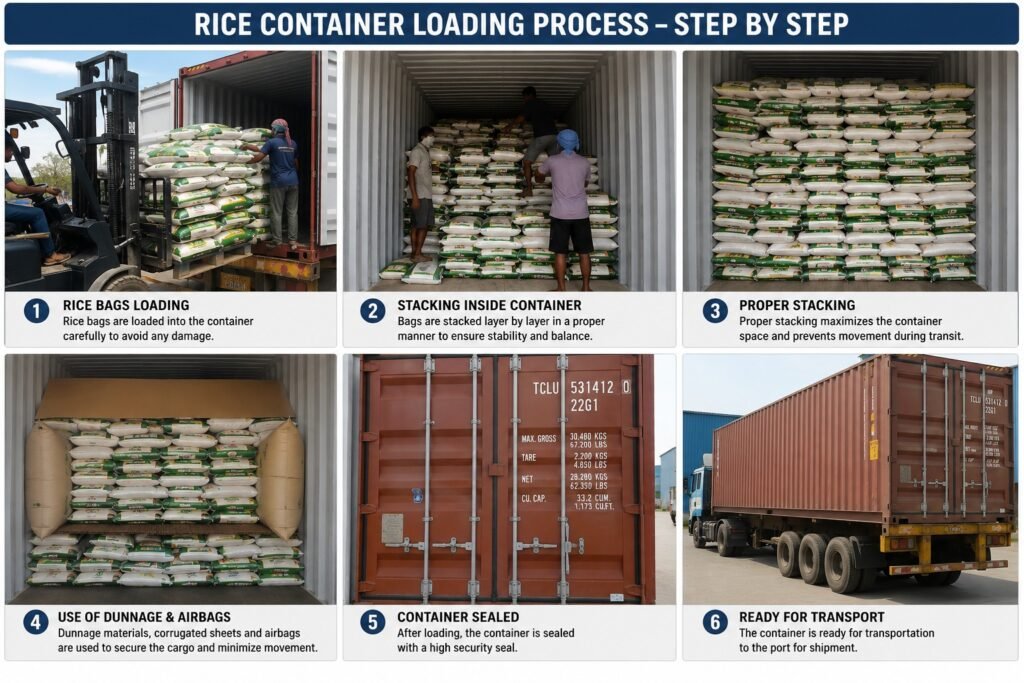
Rice bags are stacked carefully to maximize space while preventing movement during transportation.
Common stacking methods include:
- Cross stacking
- Block stacking
- Layer-by-layer stacking
Proper stacking helps distribute weight evenly throughout the container.
Step 6: Weight Distribution
Balanced weight distribution is one of the most important aspects of how container loading is done for rice export.
Exporters ensure:
- Equal weight on both sides
- Heavy bags placed at the bottom
- Stable cargo arrangement
- No excessive pressure on container walls
This reduces the risk of cargo shifting during transit.
Step 7: Securing the Cargo
Once loading is complete, the cargo is secured using:
- Dunnage materials
- Corrugated sheets
- Airbags (when required)
- Cargo straps
- Protective sheets
- Wooden pallets (if required)
These materials help keep the shipment stable throughout the voyage.
Step 8: Container Sealing
After loading, the container is sealed with a high-security seal.
The seal number is recorded in the shipping documents to ensure cargo security until it reaches the destination port.
step 9: Fumigation (If Required)
Depending on the destination country’s import regulations, fumigation may be carried out before shipment, and a Fumigation Certificate is issued.
Step 10 : Documentation
After container loading, exporters prepare all required documents, including:
- Commercial Invoice
- Packing List
- Shipping Bill
- Bill of Lading
- Certificate of Origin
- Phytosanitary Certificate (if required)
- Insurance Certificate (for insured shipments)
- Other documents requested by the buyer
Accurate documentation ensures smooth customs clearance.
Step 11: Transportation to the Port
The sealed container is transported safely to the port, where customs clearance is completed before the container is loaded onto the vessel for international shipment.
Best Practices for Rice Export Container Loading
To maintain product quality, exporters should:
- Use only dry containers
- Inspect every rice bag
- Maintain proper moisture levels
- Stack bags correctly
- Balance the cargo weight
- Use quality packaging materials
- Follow international shipping standards
- Keep complete export documentation
Why Choose VM EXIM International?
VM EXIM International is committed to delivering premium-quality agricultural products to global markets.
We provide:
- Premium-quality rice exports
- International standard packaging
- Professional container loading
- Complete export documentation
- Timely global shipping
- Quality assurance at every stage
- Reliable customer support
Learn more about our export services:
vmexim.com
Conclusion
Knowing how container loading is done for rice export is essential for maintaining product quality and ensuring successful international shipments. Every stage—from container inspection and moisture control to proper stacking, sealing, and documentation—plays a vital role in protecting the cargo during transit.
By following international best practices and working with experienced exporters like VM EXIM International, businesses can ensure safe, efficient, and reliable rice exports to customers worldwide.